
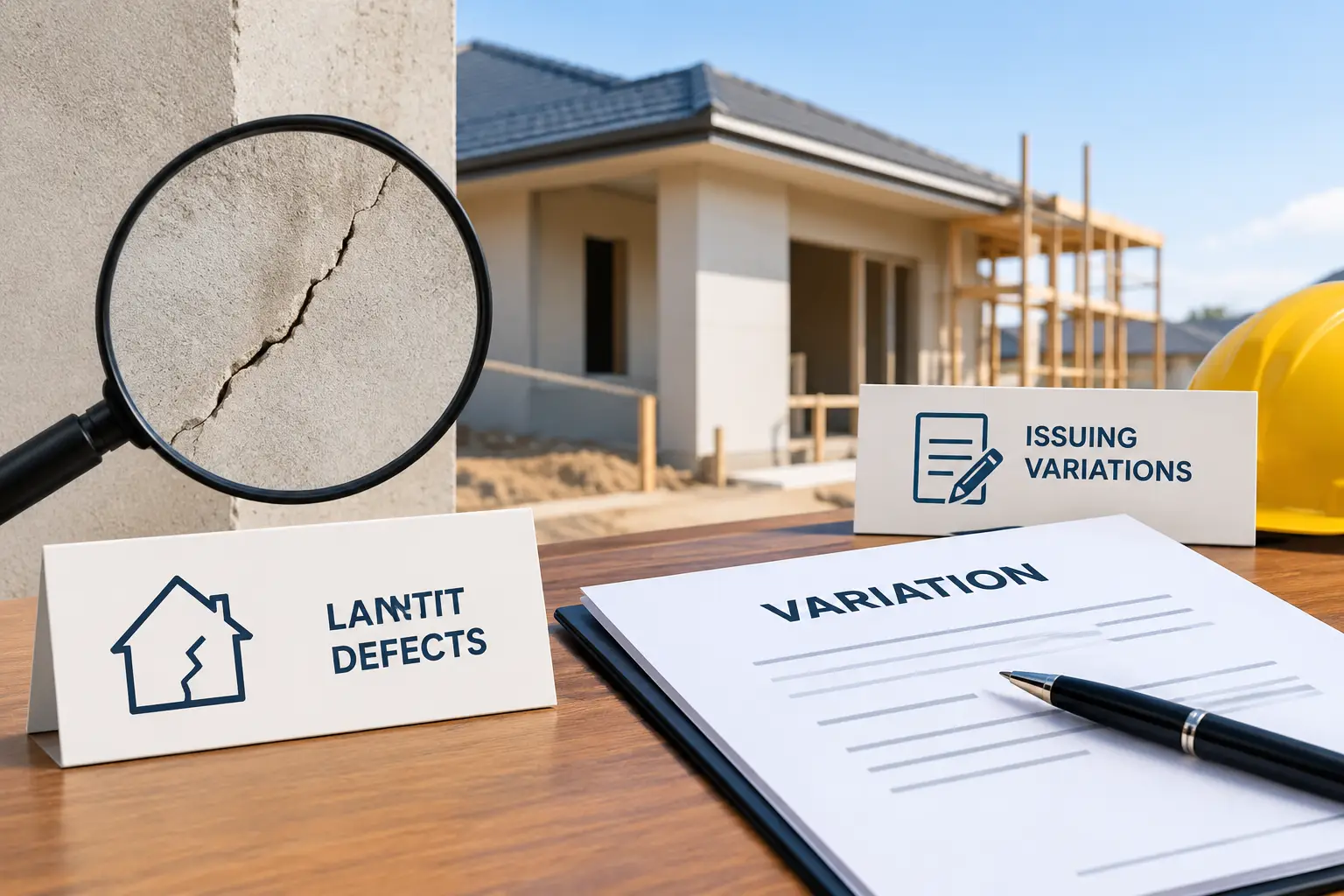
A building project can appear to be progressing as planned until an unexpected problem is uncovered. The builder may say additional work is now necessary and issue a variation, while the owner may take the view that the work should have been covered by the original contract price. It can become difficult to know who is right, when the issue was not obvious at the outset.
This article mentions how latent defects and conditions can affect construction variations, including when additional payment may be justified and when a variation may be disputed.
What Is a Latent Defect in Building and Construction?
A latent defect is a defect or problem that is not reasonably apparent or discoverable through an appropriate inspection at the relevant time. Unlike an obvious defect, it may only become apparent once construction has progressed or part of the building has been opened up.
Examples might include concealed structural problems, hidden damage, defective materials or conditions beneath the ground that could not reasonably have been identified during an ordinary inspection.
However, simply calling something a “latent defect” does not settle the issue. The circumstances surrounding its discovery matter, as does the wording of the building contract.
Can a Builder Issue a Variation for a Latent Defect?
An unexpected problem does not automatically mean a builder can charge the owner an additional amount. Whether a variation is legitimate will depend on the circumstances and the terms of the contract.
First, it is important to establish whether the issue was genuinely unforeseen. If the builder could reasonably have identified the condition before entering into the contract, there may be questions about whether it can properly be treated as a latent condition.
The original scope also matters. If the required work was already included in the agreed plans, specifications or contract price, describing it as additional work may not be enough to justify a variation.
The contract should then be reviewed carefully. Specific clauses may explain how latent conditions and variations are dealt with, including notice requirements, pricing and approval procedures. The builder may also need to comply with applicable legal requirements.
This is where early legal advice can be useful. Professional property dispute lawyers can review the contract, correspondence and circumstances surrounding the issue before positions become entrenched.
How Should a Builder Issue a Variation?
A variation should not appear as an unexpected extra charge at the end of the project. A clearer process can help everyone understand what has changed and why.
- Identify the Issue
Clearly document the unexpected condition, defect or additional work that has been discovered. Photographs, inspection reports and site records can be useful.
- Review the Contract
Check the relevant clauses dealing with variations, latent conditions, notice and approval. The exact requirements can differ considerably between contracts.
- Provide Written Notice
Give the required notice and explain what work is proposed and why it is necessary. Vague descriptions can create problems later.
- Outline Costs and Delays
Set out the expected additional cost and explain whether the variation could affect the construction schedule or completion date.
- Obtain Required Approval
Follow the contract’s approval process before commencing additional work where approval is required. Doing work first and seeking agreement afterwards can make a dispute much harder to resolve.
When Can a Construction Variation Become a Dispute?
A variation can become contentious when the owner believes the work was already part of the original contract, or when the builder has not followed the required notification process.
Disputes may also arise where a variation is issued after work has started, the additional price is considered unreasonable, or the alleged latent condition could reasonably have been discovered earlier. There may also be disagreement about who was responsible for the underlying defect.
Clear contracts, written communication and supporting evidence can make these disagreements easier to manage. If a dispute has already developed, professional property dispute lawyers can help assess the contractual position and available options.
How Can Builders and Owners Avoid Variation Disputes?
Prevention is easier than trying to untangle a dispute halfway through construction. Detailed plans and specifications should define the original scope as clearly as possible. Appropriate site investigations can also identify potential issues before work begins.
Both parties should understand the contract’s latent-condition clauses and keep written records, photographs and inspection reports. Variations should be documented properly, with potential cost and time impacts communicated early and approvals obtained where required.
When Should You Seek Legal Advice?
Legal advice may be worthwhile when a significant latent defect is discovered, a proposed variation is rejected, or additional costs are disputed. It can also help where a builder proceeds without required approval or the parties disagree about responsibility for a defect.
If you are asking, why do I need construction lawyers?, the answer comes down to preventing a manageable disagreement from becoming a much larger contractual dispute.
What Does a Construction Dispute Lawyer Actually Do?
A construction dispute lawyer can review contracts, assess the circumstances surrounding a defect or variation, advise on rights and obligations, and assist with negotiations or dispute resolution where necessary. So, to answer the question, what does a construction dispute lawyer actually do, obtaining advice early can help clarify your position before costs and disagreements escalate.
Speak to Cochrane Leahy Litigation
If a latent defect or disputed variation is creating uncertainty on your building project, Cochrane Leahy Litigation can provide advice tailored to the circumstances and the relevant building and construction issues. Construction disputes can become complicated quickly when contractual deadlines, costs and responsibility are contested. Early advice may help you understand your position and determine the most appropriate next step. Contact the firm to schedule a consultation about your construction matter.